Luxury has always evolved
There was a time when luxury meant rarity. Imported stone. Hand-carved furniture. Silk. Gold. Scale. Formality. Later, luxury became increasingly associated with technology, convenience, automation and access.
Today, many beautiful interiors already have those things. The most discerning clients can buy exceptional materials, bespoke furniture, art, appliances and technology almost anywhere in the world.
So the question becomes: what comes next?
For Fab House, the next expression of luxury is not simply more. It is a space that understands how people actually live inside it. A home that protects sleep. A workplace that supports concentration and privacy. A hotel room that gives the guest control. A restaurant that feels energetic without being exhausting. A landscape that invites movement and recovery.
Luxury becomes less about accumulation and more about intelligent support.
A room should give something back
Traditional interiors are often judged by what they contain. Wellness interiors should also be judged by what they return to the person using them.
Does the bedroom give back darkness, quiet and thermal comfort at night? Does the kitchen give back clean air after cooking? Does the bathroom manage moisture instead of creating it? Does the office give back concentration? Does the landscape give back shade, movement and restorative views? Does the building give the user meaningful control?
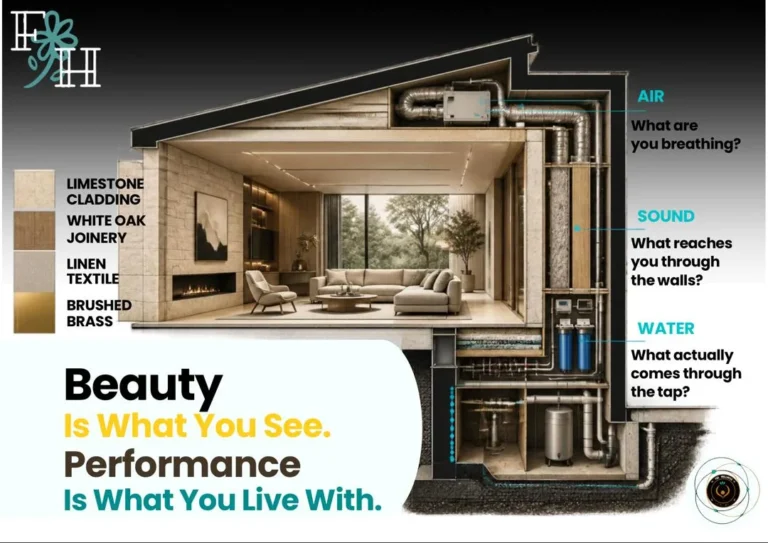
This is a more demanding definition of luxury because the result is not always immediately visible. A beautiful stone can be photographed. An acoustic buffer cannot. A designer sofa is obvious. A carefully planned air path is not. A dramatic pendant makes an impression. A well-designed night-light route may only reveal its value at 2 a.m.
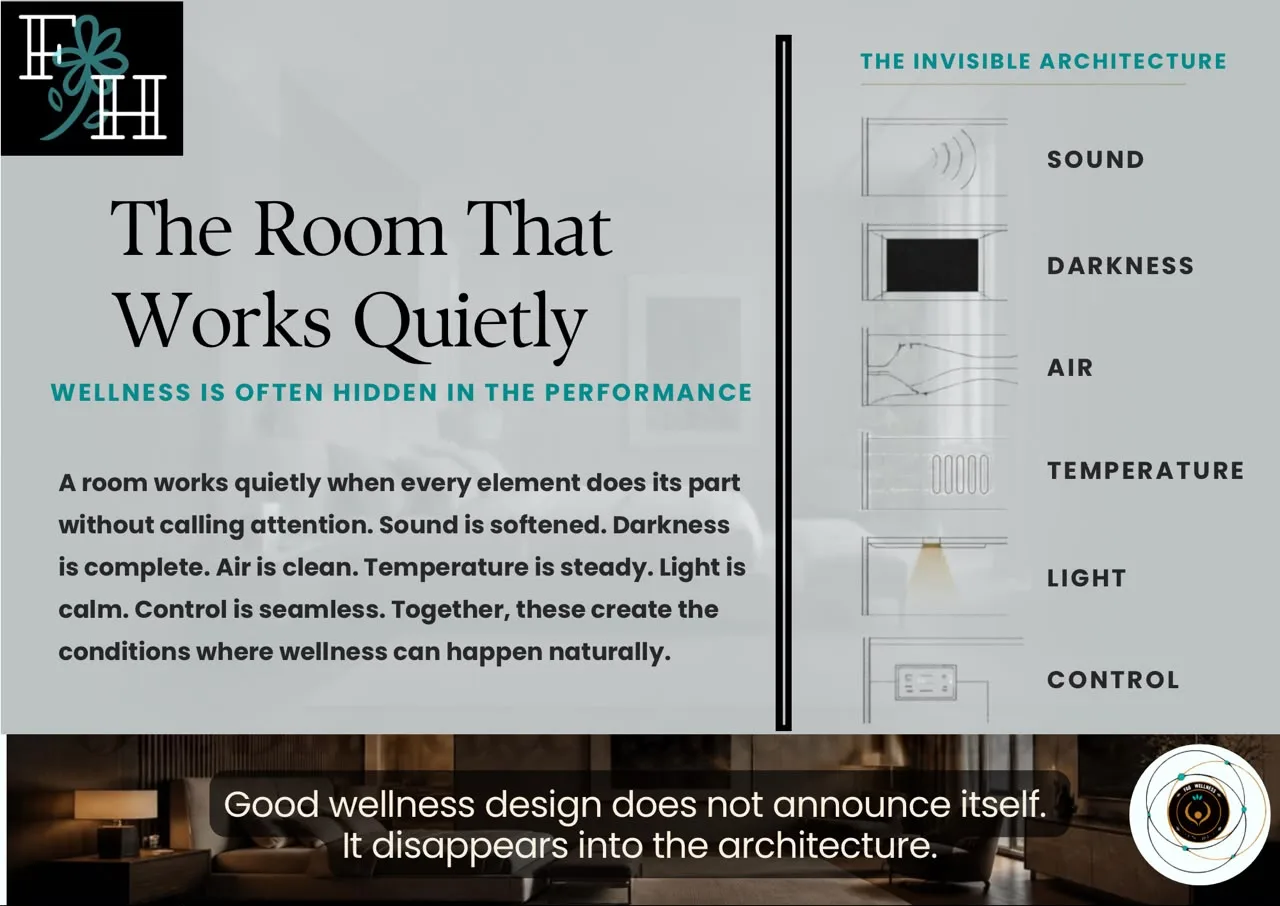
The best wellness design therefore works quietly. The client experiences the result even when they do not see the mechanism.
The luxury is not the complexity. The luxury is that the complexity has been handled properly.
The luxury of sleep
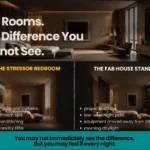
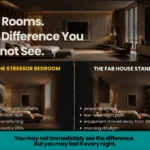
A bedroom is one of the clearest examples. It is not only a styled room. It is a nightly physiological recovery environment.
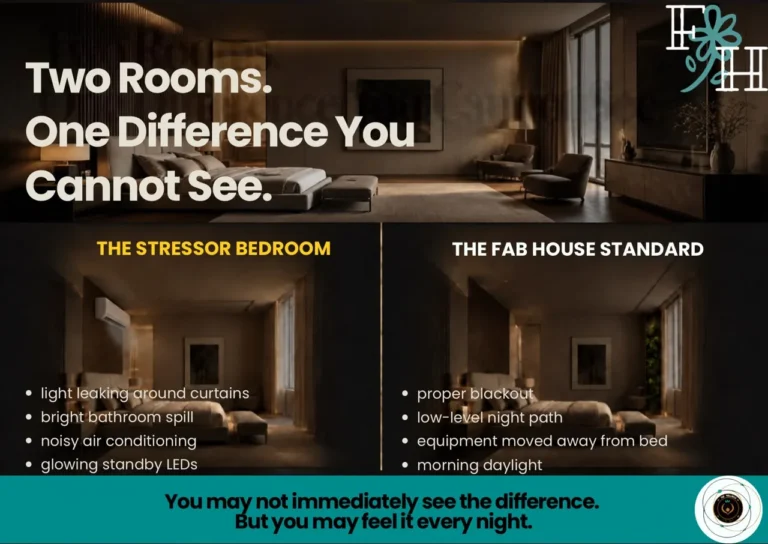
True bedroom luxury includes darkness that actually works, protection from intermittent noise, quiet and individual temperature control, appropriate air quality, privacy, reduced bathroom light spill and a simple way to move safely at night without switching on bright overhead lights.
It includes placing noisy plant, pumps, risers and soil pipes away from the headboard where possible. It includes curtain details that control side leakage. It includes door seals that do not undermine an otherwise expensive partition. It includes technology that can be turned off.
The goal is not to promise perfect sleep. No interior can guarantee that. The goal is to remove avoidable environmental friction and protect the opportunity for sleep.
The luxury of control
Control is another form of luxury that is easy to underestimate.
A truly intelligent space does not force every person to experience the same light level, temperature, airflow or degree of social exposure. It gives people choices.
This is particularly important in family homes, executive workplaces, hospitality environments and wellness spaces. One person may need retreat while another wants connection. One may be sensitive to glare. Another may need more light. A guest may want the room cooler. A child may need a quieter space. An older adult may need safer night navigation.
Autonomy can be designed through dimmers, operable blinds, simple local controls, privacy options, alternative seating conditions and rooms with different levels of stimulation.
A smart building that removes choice is not necessarily more luxurious. In some cases, a beautifully designed physical switch and a manual override are more sophisticated than another app.
The luxury of not having to think about the infrastructure
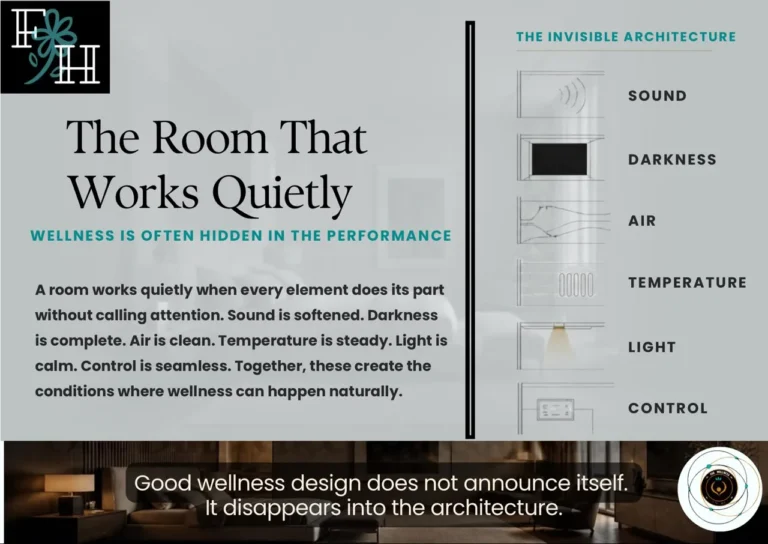
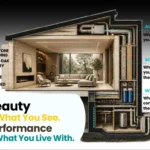
The highest-performing systems often become invisible to the user.
Water treatment is one example. The client should not have to stand in the kitchen thinking about sediment, activated carbon, ultraviolet treatment, storage hygiene or cartridge schedules. Those decisions should have been resolved through testing, design and maintenance planning.
Air quality is similar. The user should not need to understand duct velocities, extraction rates, moisture risk or filter access. They should simply experience a space that feels fresh, comfortable and well managed.
Good technology follows the same principle. It dims the lights, detects a leak, manages a system and supports the user without becoming the central experience of the room.
The luxury is not the complexity. The luxury is that the complexity has been handled properly.
The luxury of acoustic privacy
Privacy is not only visual. Sound determines whether a room feels protected, exposed, restful or exhausting.
In a home, acoustic luxury may mean a bedroom that is protected from children’s play areas, media rooms, pumps or plumbing. In an executive office, it may mean being able to have a confidential conversation without wondering who can hear through the wall. In a treatment room, privacy is part of trust. In a restaurant, it means creating energy without making conversation difficult.
The best acoustic environment is not necessarily silent. It is appropriate. It supports the purpose of the room and reduces the burden on the user.
The luxury of materials that have been thought through
Material luxury is often described through origin, rarity, craft and appearance. Wellness design adds another layer: what does the material mean for the person who will live with it?
How does it emit? How does it behave with moisture? How will it be cleaned? Can it be repaired? Is it slippery? Does it create glare? What does it feel like to touch? How does it change the acoustics? What happens when facilities teams replace it later?
This does not reduce beauty. It strengthens it. Material wellness is profoundly sensory. Grain, softness, reflectance, temperature to the touch, smell and acoustic absorption all shape whether a room feels calm, clinical, grounded, luxurious or overstimulating.
The goal is not a catalogue of “healthy products.” It is a coherent material environment in which aesthetics and performance support one another.
The luxury of a nervous system that does not have to fight the room
People continuously respond to their surroundings, often without consciously identifying what is happening. Glare. Noise. Visual clutter. Poor wayfinding. Lack of privacy. Unpredictable temperature. Strong fragrance. Bright night lighting. Constant speech. These conditions can make a space demanding even when it is visually impressive.
Wellness design tries to reduce unnecessary environmental friction. That means providing clear transitions between active and restorative zones, public and private spaces, day and night, social connection and retreat.
It also means accepting that one universally “calming” or “stimulating” space will not work for everyone. Neuroinclusive design recognises different sensory thresholds and gives users legitimate ways to regulate stimulation.
The luxury of nature that is more than decoration
Nature is another part of luxury that has evolved. It is not only a vase of flowers or a feature plant. It is the relationship between the interior, the landscape and the larger environment.
What can you see from the bed? What does the morning light reach? Can you move easily from inside to outside? Is there shade when the climate demands it? Does the landscape create privacy without feeling defensive? Is there a route that invites walking? Can water, planting and seasonal change become part of the everyday experience?
The strongest biophilic environments do not need to announce that they are “biophilic.” The connection to nature feels inherent to the architecture.
The luxury of longevity
A space designed for wellbeing should also be able to age with its user.
That means accessibility without institutional language. Safer circulation. Sensible lighting. Reduced fall risk. Comfortable seating heights. Clear wayfinding. Bathrooms that can adapt. Controls that remain understandable. Materials that can be repaired instead of discarded. Spaces that work for children, adults, older family members and guests with different needs.
Longevity is not only about living longer. In design, it also means creating environments that remain useful, maintainable and supportive over time.
The luxury of evidence and restraint
Wellness design is vulnerable to overclaiming because the language of health is powerful. This is precisely why restraint matters.
A designer should be able to say what the environment is intended to support without pretending that a room can treat disease, guarantee sleep, cure anxiety or create a medical outcome.
There is already enough value in designing better light, air, water, sound, temperature, materials, movement, nature and control. We do not need exaggerated claims to make those decisions meaningful.
Restraint is part of credibility. And credibility is part of luxury.
The new luxury is intelligent support
Perhaps modern luxury should not simply be about what we can add to a room.
Perhaps it should be about how intelligently that room supports the person inside it.
A bedroom that protects sleep. A kitchen that manages air. A home that becomes softer as night arrives. Water infrastructure you never have to think about. Materials selected not only because they look beautiful, but because someone considered what they contain and how they will perform. A landscape that encourages movement and recovery. Technology that supports rather than dominates. Spaces that allow both connection and retreat.
The best wellness design does not need to announce itself.
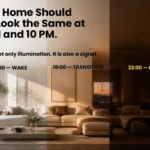
You may simply walk into the space and feel that something is different. You breathe more easily. You slow down. The room feels calmer. Morning feels like morning. Night feels like night. The environment begins to work with you rather than against you.
That is a different definition of luxury — and, for Fab House, it is where the future of interior design is going.
FAB HOUSE – FOR HEALTHY INTERIORS
Designing spaces around human biology.